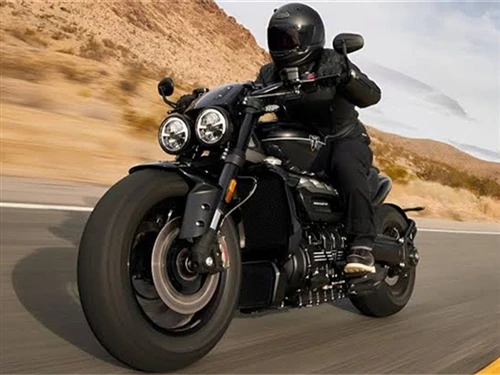
The fundamental operation of motorcycle tires revolves around three core mechanisms: load-bearing support, grip generation, and deformation-based cushioning. These are detailed below:
Load-Bearing and Cushioning
As the only component in contact with the ground, the tire supports the combined weight of the motorcycle and the rider through internal air pressure. During operation, it undergoes repeated cycles of elastic deformation-compressing and rebounding-which absorbs road irregularities and cushions impacts, thereby enhancing ride comfort and stability.
Core Mechanisms of Grip Generation
Rubber Adhesion: At a microscopic level, the tire rubber forms a molecular-level bond with the road surface. With soft-compound "slick" or racing tires, this adhesive effect intensifies significantly once the tire reaches its operating temperature, greatly boosting grip.
Mechanical Interlocking: Tiny protrusions on the road surface embed themselves into the elastic rubber, creating a resistance similar to "meshing" or interlocking gears; on dry surfaces, this is a key source of friction.
Tread Drainage: The tread groove pattern rapidly channels water away from the contact patch, preventing hydroplaning and ensuring reliable grip on wet or slippery roads.
Adaptation via Specialized Structure
Motorcycle tires feature a curved tread profile. When the bike leans into a turn, the sidewall area makes contact with the ground, expanding the contact patch and providing the necessary support for high-lean-angle cornering-a key distinction from the flat tread profiles of standard car tires.